

Glossary guide
Knowledge Graph: A Practical Guide
A knowledge graph is a connected representation of real-world things and their relationships. For a website, the practical task is making those facts clear, accurate, and maintainable.
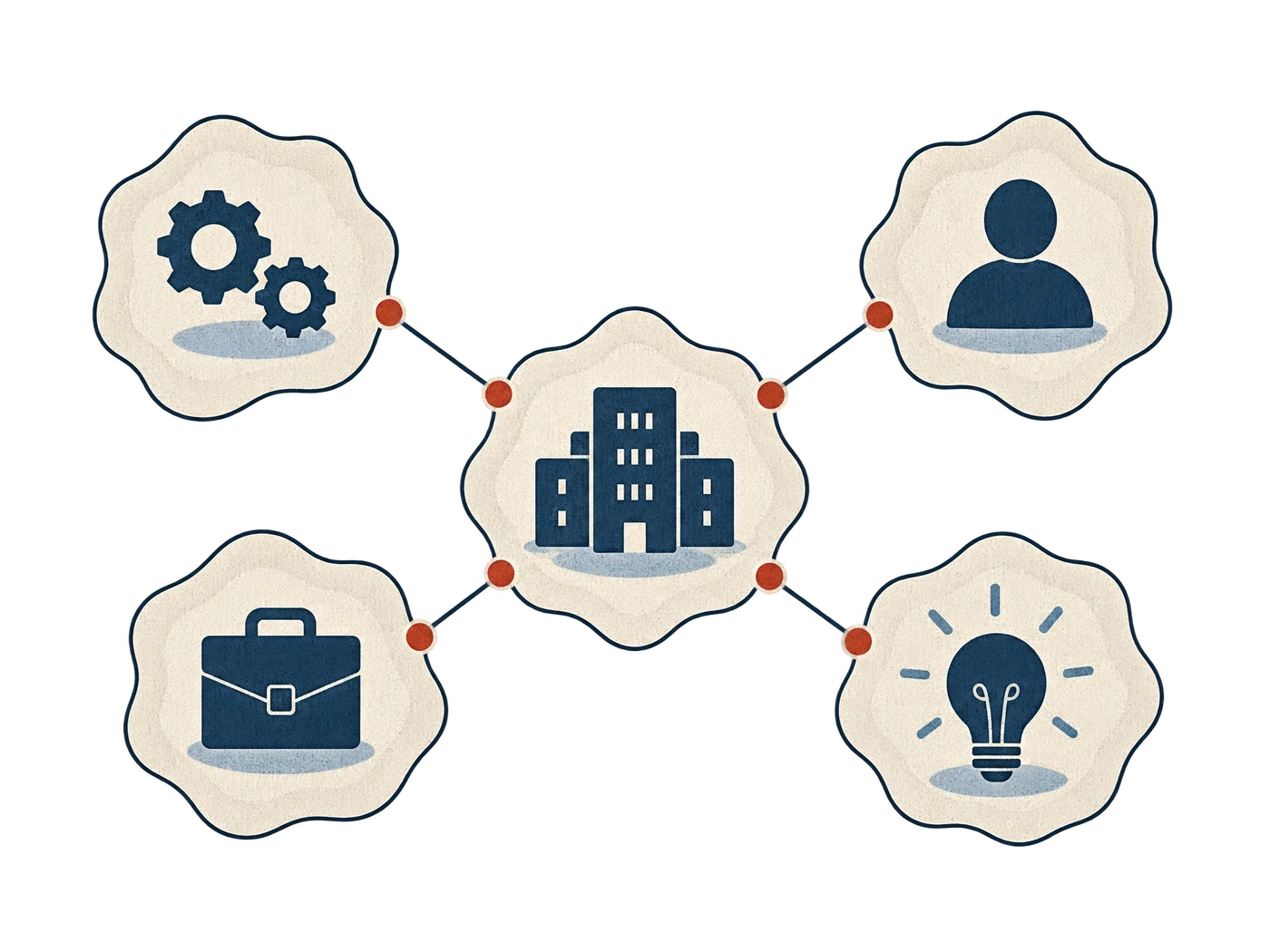
A graph is a model, not a Google Knowledge Panel
The phrase knowledge graph is often used as if it means earning a branded panel in Google results. That is too narrow. The useful part for a website is the underlying idea: a search system and a visitor need reliable facts about the things a page describes and the relationships between them.
A service site might connect its organisation to the specialist responsible for delivery, to a defined service, to a project that demonstrates relevant work, and to a guide that explains the method. Those are different entities with different roles. The site becomes easier to trust when the relationships are explicit and consistent.
Connect facts that can be supported
The strongest graph starts with information the business can stand behind. That means using a canonical name, a clear description, a real page for the subject, and evidence that is visible to a visitor. It does not mean claiming relationships that are difficult to prove or publishing thin pages for every possible entity.
- Give each important entity a clear role: organisation, person, service, project, product, location, or explanatory concept.
- Keep important identifiers and descriptions consistent across the pages where a reader expects to find them.
- Link from a service to the person, method, evidence, and supporting guide that make the offer understandable.
- Use structured data to describe the page truthfully, then validate it as the content and templates evolve.
Make relationships useful to the reader
A connected site is not a diagram for its own sake. The relationship should help a visitor answer a practical question: who does this work, what exactly is being offered, where has a related method been used, and what can I read before deciding whether to enquire?
That is why knowledge-graph thinking works best alongside Entity SEO and Entity Mapping. Entity SEO clarifies the things that matter. Mapping decides which claims and pages need to connect. The graph is the resulting body of consistent, visible relationships.
Sources
Related note
AI Search Visibility: What to Measure
Use a measurement framework that checks whether connected, useful pages are being discovered for the questions that matter.
Read the Note