

Glossary guide
Semantic SEO: A Practical Guide
Semantic SEO is the work of helping a page answer the meaning behind a question, not only match the words typed into a search box.
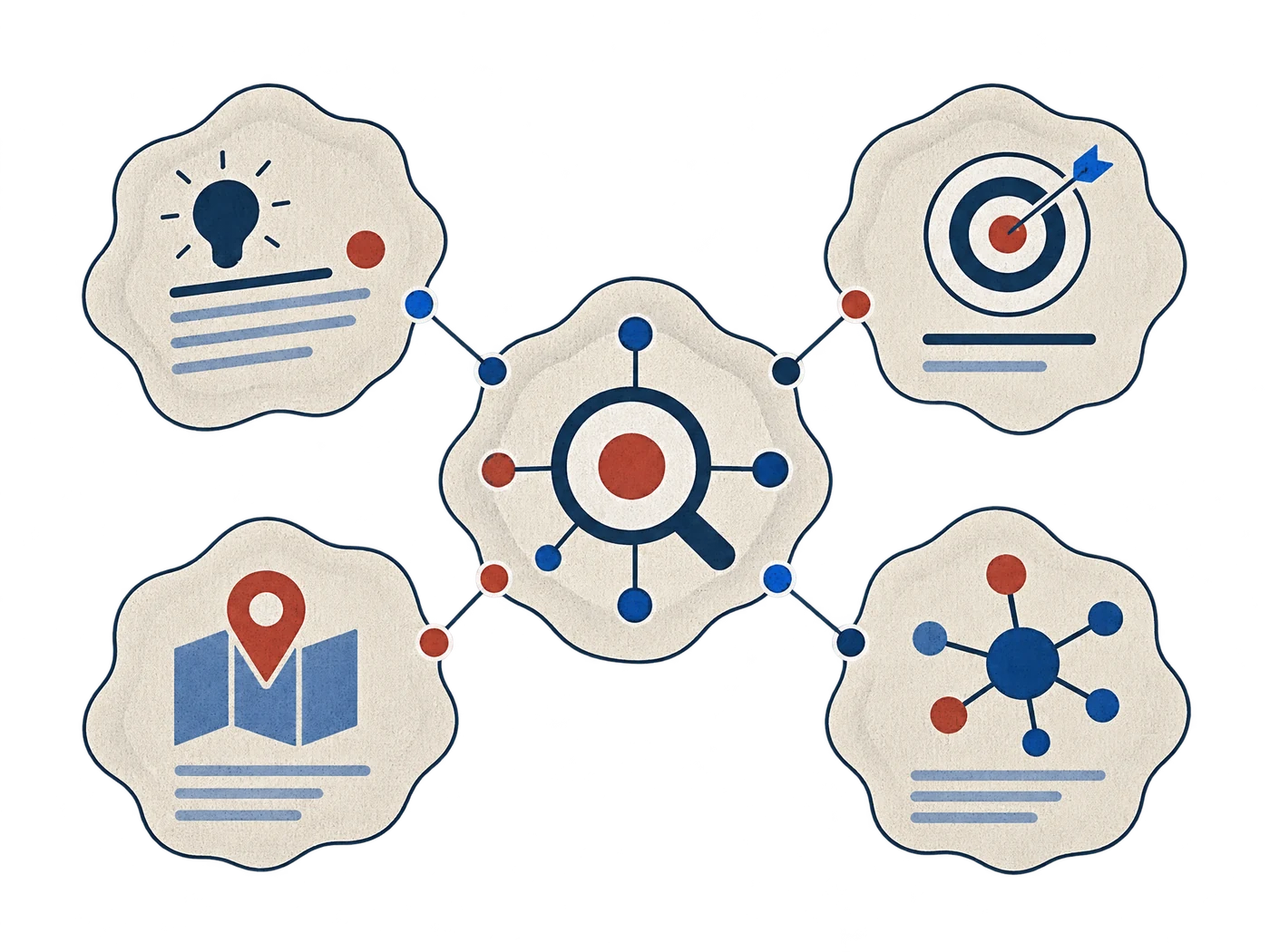
Meaning is more useful than repetition
A search query is often shorthand for a larger need. Someone looking for Entity SEO may want a definition, a method, a way to connect information across a site, or confidence that a proposed implementation is not just a markup exercise. A useful page makes the main answer clear, then gives the reader enough context to understand the decision behind it.
That is different from treating every related phrase as a separate target. Semantic SEO is not a technique for hiding more variations in a page. It is the discipline of deciding what a page is truly about, what it needs to explain, and which supporting ideas help a visitor act on the answer.
Build the page around the real question
Start with the question that makes the page necessary. Then identify the terms a reader may need, the trade-offs that affect the answer, and the next page or action that follows naturally. This gives a page a job beyond attracting an impression.
- State the primary subject in the title, main heading, opening answer, and supporting metadata without forcing exact-match repetition.
- Use subheadings to answer the questions that make the primary answer useful, such as scope, constraints, examples, and decisions.
- Connect to pages that deepen a necessary relationship, rather than creating links solely because terms look similar.
- Remove sections that do not help the reader understand the subject or decide what to do next.
Use semantic structure before structured data
Clear writing, logical headings, internal links, and accurate names give a page its semantic structure. Structured data can add machine-readable clues, but it should describe the visible page rather than replace the work of making the subject understandable.
For a specialist service business, this can be as practical as keeping the name of an offer consistent, explaining which problem it solves, showing who delivers it, and linking to the relevant project or guide. The relationship is valuable because a buyer can follow it too.
Sources
Related note
Generative Engine Optimization
See why useful, original information remains more valuable than pages made only to cover phrase variations.
Read the Note